TABLE OF CONTENTS
Sign-Up
Enter your email address
It all began with two visionaries—Dr. Ivan Getting and Bradford Parkinson crafted GPS for military use. Their goal? To revolutionize navigation and tracking with precision like never before.
The turning point came in 1983 when a tragic incident with a Korean Airlines flight led President Reagan to make a bold decision: GPS should be available to everyone, not just the military. And so, a technology meant for soldiers became a tool we rely on daily. Let’s uncover the history and the pioneers behind this incredible GPS invention.
When GPS Was Invented?
In 1973, the U.S. Department of Defense aimed to develop what would later be called GPS. Do you wanna know, when GPS was started? Its a in It all started in 1978 when the first test satellite, Block-I debuted from Vandenberg Air Force Base. This culminated in a final constellation size of 24 satellites that attained FOC on July 17, 1993. Whereas today they stand at 31, addressing the entire globe.
The first real test for GPS came during the early 1990s Gulf War when it assisted U.S. troops in navigating the difficult Kuwaiti and Iraqi territory. You might use it every day, but the Global Positioning System (GPS) is probably something you take for granted.
Who Owns the GPS Technology?
You can probably use the Global Positioning System (GPS) without giving it a second thought every day, but did you know that GPS is owned and operated by the U.S. government? In particular, the Department of Defense (DoD) makes sure that it works.
Evolved from the military program formerly known as Navstar, GPS was initiated in 1973 to serve both an inter-service / international civil aviation (ICAO)-regulated and a missile guidance system. The new system blended parts of the existing TRANSIT, TIMATION, and Project 621B navigation systems into a device vastly superior to any that came before it. This new method was developed as a response to the restrictions of previous methods and users globally soon found it essential.
Who Were the Innovators Behind GPS?
The GPS invention is a story of teamwork and collaboration. Dr. Ivan Getting and Bradford Parkinson often get the spotlight, but they weren’t the only contributors. Many other innovators played key roles in turning this idea into reality.
Join us as we explore the lives and contributions of each of these remarkable inventors, and discover how their combined efforts made GPS possible!
Dr. Gladys West
Dr. Gladys West, an American mathematician, played an important role in the development of GPS. She was born and raised in rural Virginia. she faced many challenges as a Black woman in a predominantly male field. Her work was foundational to the GPS technology we depend on today. Through detailed analysis of satellite data, she made innovative contributions to understanding the Earth's shape.
Contributions:
- Created important math models to help understand the Earth's shape.
- Analyzed satellite data closely, which was key to developing GPS.
- Worked on NAVSTAR GPS, an early version of the system we use today.
Roger L. Easton
Roger L. Easton was a visionary in satellite technology and precise timekeeping, both of which were essential to the development of GPS. His expertise in radio signals and atomic clocks played a key role in the early design stages of NAVSTAR GPS, paving the way for the system's accuracy and reliability.
Contributions:
- Developed precise timekeeping through atomic clocks for satellite tracking.
- Played a key role in the design and development of NAVSTAR GPS.
- Enhanced GPS accuracy through pioneering techniques in radio signals.
Dr. Ivan Getting
Dr. Ivan Getting was one of the leading figures in conceptualizing satellite-based navigation systems. He has a strong background in engineering and science. He imagined satellites to provide real-time location data, which eventually led to the creation of GPS. His collaboration with the Air Force Space Command was instrumental in turning theoretical concepts into an operational system.
Contributions:
- Conceived the idea of a satellite-based navigation system that became GPS.
- Worked closely with the Air Force Space Command to develop satellite technology.
- Transformed theoretical aspects of satellite navigation into practical reality.
Bradford Parkinson
He was Often called the "Father of GPS,". Bradford Parkinson's leadership was vital during the development of the system. As the head of the NAVSTAR GPS Joint Program Office, he guided the project from its early stages to its eventual deployment. As a result, a bold concept turned into a global navigation tool.
Contributions:
- Led the initial development and deployment of GPS.
- Headed the NAVSTAR GPS Joint Program Office, laying the system’s foundation.
- Transitioned GPS from a theoretical concept to a functional global navigation system.
How Does GPS Tracking Software Work?
GPS tracking software communicate with satellites which are orbiting the earth. It calculates its distance from these satellites by measuring the time. It takes for their signals to reach your device.
With data from at least three satellites, your device can determine your exact location, with data from at least three satellites. It includes latitude, longitude, and altitude. All this happens in just a few seconds.
How is GPS Used Today?
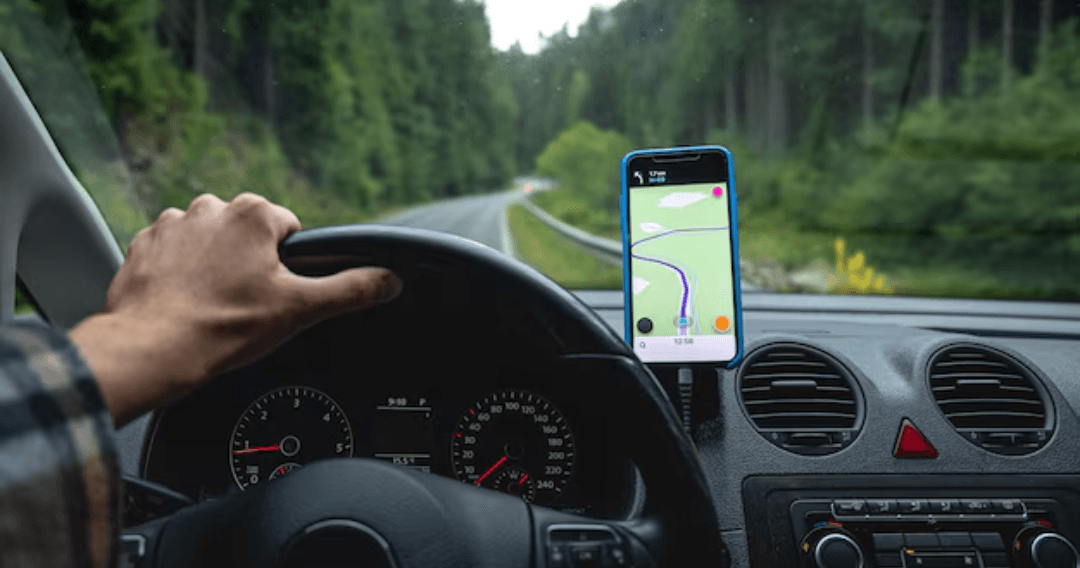
- GPS is used in transportation and logistics for vehicle navigation, fleet management, and optimizing delivery routes.
- In agriculture, GPS aids precision farming, including tasks like planting, fertilizing, and crop monitoring.
- The construction industry relies on GPS for surveying, site planning, and tracking equipment.
- Telecommunications benefit from GPS by synchronizing networks and ensuring accurate timing for communication systems.
- Emergency services use GPS to locate and respond to emergencies quickly.
- Aviation depends on GPS for navigation, flight planning, and air traffic control.
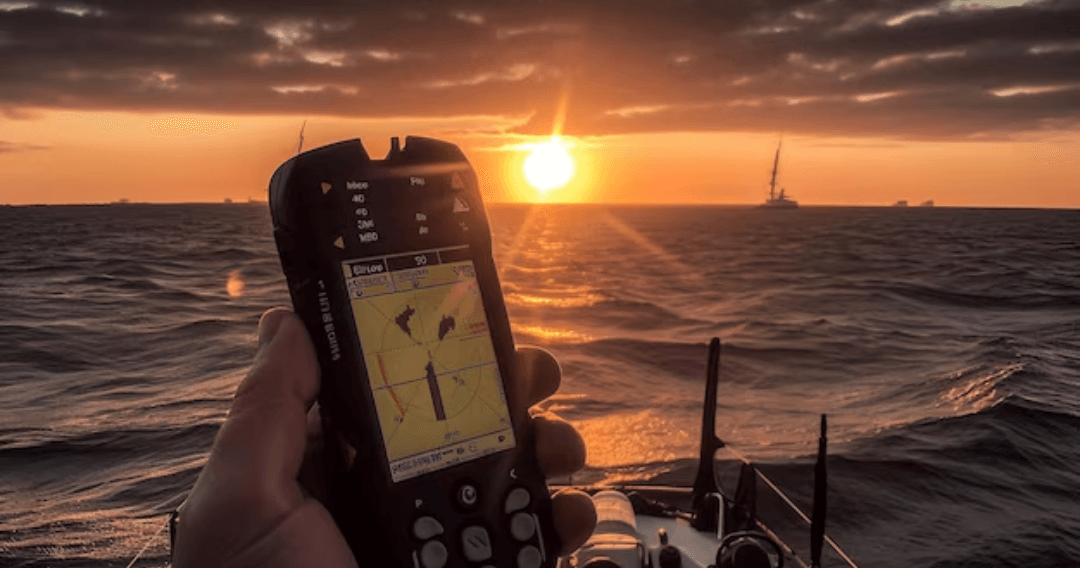
- In the maritime industry, GPS is crucial for navigation and tracking in shipping and fishing.
- The military and defense sectors use GPS for troop movement, missile guidance, and reconnaissance.
- GPS plays a significant role in recreation and tourism, supporting activities like hiking, geocaching, and travel navigation.
- In the energy and utilities industries, GPS is used for monitoring pipelines, managing power grids, and exploring resources.
Final Thoughts
Finally, you know when GPS was created. It's a great example of human ingenuity and hard work. Brilliant minds like Dr. Ivan Getting, Bradford Parkinson, Dr. Gladys West, and Roger L. Easton turned a military tool into something that benefits everyone.
Today, GPS is much more than just a navigation tool; it has transformed industries like aviation and farming. With white label tracking platform businesses can now customize GPS technology to meet their specific needs. As GPS continues to improve, it will keep shaping our world in exciting new ways.

Aiden mitchell
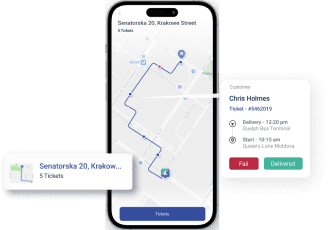
As a GPS Tech geek, I find Lumyri's transformative impact on GPS technology on businesses and their customers. Real-time tracking information empowers businesses to provide accurate delivery estimates, allowing customers to plan their schedules with precision.